Coach: A Complete Guide to the Brand in 2026
Few American fashion labels are better known than Coach, and in 2026 its business is growing strongly. What opened as a modest leather workshop became a handbag specialist, and the company now sells clothing, shoes and accessories in stores around the world. Its founding idea has held firm for decades: well-crafted leather goods priced below the traditional European luxury houses. That space has been defined by a federal court as accessible luxury, separate from both mass-market fashion and true luxury.
This guide explains how Coach began, who owns and runs it, the current size of the business and what its range includes. It also looks at the difference between a full-price coach store and a coach outlet, a topic that frequently causes confusion. Each number is dated to its source, and all prices are observed market prices, not an official price list.
How a Manhattan Workshop Became an American Brand
In 1941, a modest family-run leather workshop was founded in Manhattan, the business to which Coach traces its roots. By Coach’s own account, six artisans worked in a loft on 34th Street, crafting men’s wallets, billfolds and other small leather goods. Both handbags and the Coach name followed later, the name dating to about 1960 or 1961. Contrary to a persistent misconception, Miles and Lillian Cahn were not in fact the original owners of the workshop.
The Cahns joined the business in 1946, and Miles was coach sale uk in charge of the factory by around 1950. The couple took charge in 1961, when the pair purchased the interests of the original owners. Reportedly, it was Lillian Cahn who suggested adding women’s handbags, which would redefine the company. The credit for glovetanned leather belongs to Miles Cahn; it is a finish based on the way a worn baseball glove grows softer with use.
The Bonnie Cashin Years
The designer most closely linked with early Coach is Bonnie Cashin, who was its first lead designer. Reportedly, she worked under contract instead of as a staff employee, and she was not a co-founder. Coach’s own pages give her first year as both 1961 and 1962, leaving a small puzzle about when she began. What is not in doubt is that she designed for Coach until 1974.
Cashin introduced the brass turnlock closure in 1964, which, in Coach’s account, was inspired by the toggle on the top of her convertible. She is also recognized for side pockets, coin-purse details and brighter colors that freshened the brand’s look. Styles such as the Cassie crossbody carry the turnlock, which continues to be one of Coach’s most recognizable details.
From Sara Lee to Tapestry: Ownership and Listings
In July 1985, Coach was sold to Sara Lee Corporation. In October 2000 Coach went public, and in the following year Sara Lee is reported to have fully exited. Coach’s Signature collection, with the “C” monogram, debuted in 2001, which means the pattern is a modern addition rather than a mid-century heritage motif. Coach, Inc. became Tapestry, Inc. on 31 October 2017, while its ticker switched from COH to TPR.
The renaming applied only to the parent company; the Coach brand, its stores and its products kept their names. Coach, Inc. had bought Stuart Weitzman in 2015, but Tapestry agreed to sell the shoe label to Caleres in a deal that was completed on 4 August 2025. By 2026, Tapestry’s portfolio holds only two brands, Coach and Kate Spade, and Coach is by far the bigger of the two.
Why the Capri Deal Collapsed
On 10 August 2023, Tapestry announced a plan to buy Capri Holdings, the owner of Michael Kors, Versace and Jimmy Choo. In April 2024 the Federal Trade Commission challenged the deal, and it asked a federal court for a preliminary injunction to block it. That preliminary injunction was granted on 24 October 2024 by a federal judge in the Southern District of New York. The order did not decide the merits, though it prevented the companies from closing the deal while the challenge went on.
In its decision, the court accepted that an accessible luxury handbag market exists, set apart from both mass-market bags and true luxury. On 14 November 2024, Tapestry and Capri terminated their agreement, saying that the legal process was not expected to conclude before their February 2025 deadline. As the acquisition was never finalized, Tapestry owns no part of any Michael Kors, Versace or Jimmy Choo business.
Who Is in Charge at Coach Today
The parent company, Tapestry, is run by its chief executive, Joanne Crevoiserat. The brand itself is led by Todd Kahn, Coach’s CEO and brand president, having taken the job on an interim basis in July 2020 and become permanent in April 2021. The creative side falls to Stuart Vevers, whose appointment became public in June 2013.
Vevers continues as Coach’s creative director in 2026, having reportedly presented his first Coach collection in February 2014. Before Coach, he is reported to have been creative director at Loewe following a stint at Mulberry. Under Vevers, Coach has drawn heavily on its archive, reissuing older designs as well as reworking vintage shapes into new bags such as the Tabby. On 11 February 2026, Vevers presented his Fall 2026 collection at the Cunard Building in New York.
The Numbers Behind Coach
To see how big Coach has become, turn to Tapestry’s annual report for the fiscal year ended 27 June 2026. Tapestry overall recorded $8,004.2 million, with Coach’s net sales making up $6,914.7 million, up 24% on the prior year. Put another way, roughly 86% of group sales were produced by Coach.
Coach’s directly operated store count stood at 973 at the end of that fiscal year: 336 in North America and 637 in international markets. A figure of about 1,299 stores is also quoted, but it counts every Tapestry store rather than Coach alone. Growth at a mid-teens percentage rate in the average unit retail price of Coach handbags over the year was also reported by Tapestry. Part of the increase, the company has said, comes from fewer promotions.
| Indicator | Result | Timeframe |
|---|---|---|
| Coach net sales | $6,914.7 million (up 24%) | Fiscal 2026 |
| Net sales, Tapestry | $8,004.2 million | The 2026 fiscal year |
| Coach stores under direct operation | 973 | As of the end of fiscal 2026 |
| Of these, North America | 336 | As of the end of fiscal 2026 |
| Of these, international | 637 | End of fiscal 2026 |
| Brands in the Tapestry portfolio | Only Coach and Kate Spade | 2026 |
Bags, Ready-to-Wear and Footwear: What Coach Sells
Structured icons share space with soft, slouchy leather in coach handbags today, as handbags remain the heart of the business. Important launches include the Tabby in 2019, based on a 1970s archive shape, the Rogue in 2016 with a return in 2021, and the Brooklyn, a relaxed coach shoulder bag, in August 2024. The Empire Carryall was unveiled on the Fall 2024 runway and released in February 2025. At the top end, a Rogue 25 in alligator was spotted at $8,000, the highest bag price observed, but the Kisslock Frame Bag, reportedly the opening look of the Fall 2026 show, was observed at $350. Coach Originals bags are not vintage: they are newly made reissues of archive designs.
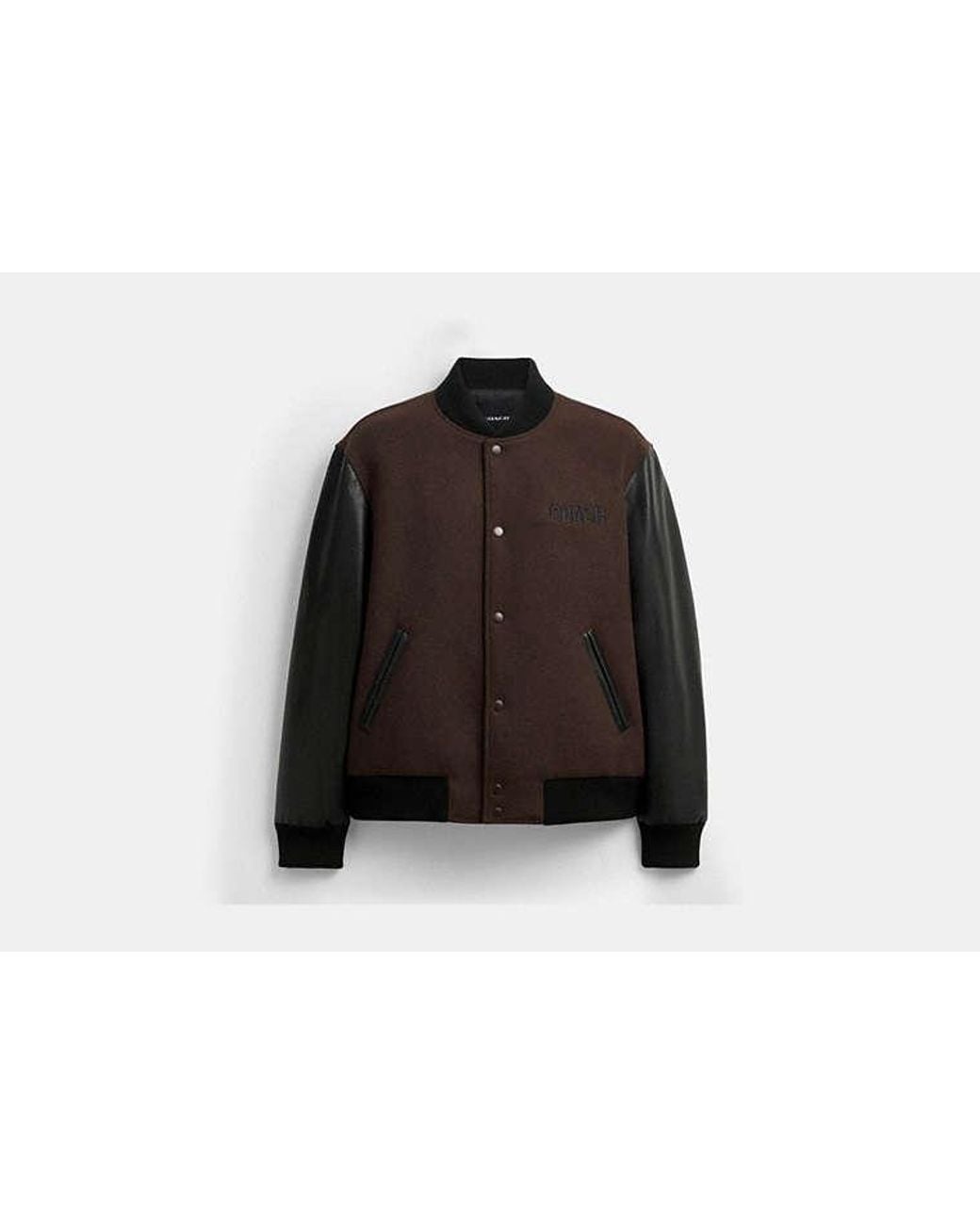
Ready-to-wear has become a serious part of the range: coach clothing for Fall 2026 brought varsity jackets in leather and in leather with wool, the brand’s first all-shearling varsity jacket, peacoats and suede coats. In the same show, the brand introduced blazers, flared trousers, A-line skirts, floor-length high-collar dresses and all-gender jacquard knits. Footwear includes sneakers such as the Soho Sneaker and the laceless Skate Sneaker, and fashion press spotted loafers, clogs, booties and sandals for fall. Coach also runs Coach (Re)Loved, launched in 2021 and reported to include trade-ins, restored bags and upcycled pieces, plus Coachtopia, a circular-design sub-brand launched on 20 April 2023.
Where to Shop: Coach Store, Coach Outlet and Online
A full-price coach store carries the current collections, and the biggest flagships use the Coach House name. Reports say the New York Coach House on Fifth Avenue opened in 2016, while a new Coach House at 645 Fifth Avenue is reportedly targeted for 2027. Harrods, Selfridges and John Lewis carry the brand in the UK, while London’s Coach House on Regent Street opened in 2016 as well. Anyone hunting for a structured coach bag, a coach tote bag or a new jacket from the latest season can find it in the full-price range.
Coach Outlet is Coach’s own official sales channel, with outlet stores and an official online outlet section on Coach’s own website. A quote attributed to Coach’s head of investor relations in 2014 set the share of outlet merchandise made for the outlet channel at around 85%, yet that figure is now dated, and Tapestry has since talked about bringing some full-price product into outlets. Asserting that outlet bags are always worse, or indistinguishable from boutique bags, stretches past the public evidence. British outlet stores can be found at Bicester Village, Cheshire Oaks and Ashford Designer Outlet. Shoppers sometimes type “couch” or “cosch” when searching for the brand, so confirm that any site promising huge discounts is really Coach’s own website or a known retailer.